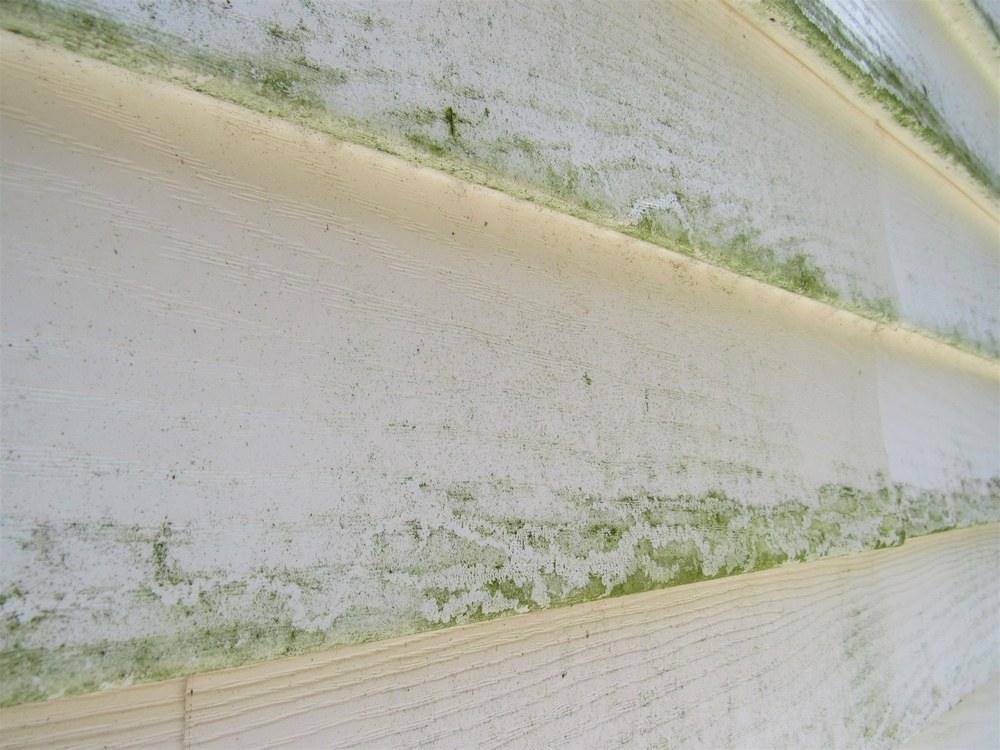
Siding turns green in Alabama because algae grows wherever walls stay damp and shaded. Tiny algae spores ride in on the wind and settle on siding, trim and roof edges. Warm temperatures and high humidity give them the steady moisture they need to spread. The green film you see is a living layer of algae. It shows up first on walls that get little direct sun. Left alone, it slowly thickens and darkens with each season.
Many homeowners first blame dirt or a cheap paint job. Knowing why siding turns green helps you treat the cause instead of the color. Central Alabama sees about 51 inches of rain in a typical year. The air also stays humid for much of the year. Together, those conditions keep surfaces damp long after a storm passes. Any wall that dries slowly becomes a home for green algae on siding, along with mildew and moss. The color is only the visible part.
Green, black and yellow marks each have a different cause and a different fix. Below, you will learn how to tell them apart and why some walls turn first. You will also see how often a house wash keeps growth in check. Last, we explain why scrubbing or blasting tends to bring the green right back within months.
Algae, Mildew and Pollen Each Leave a Different Mark
Green or green-gray film is usually algae. Gray or black spots under eaves or behind shrubs are more likely mildew, which is a type of fungus. A simple test helps tell mildew from dirt. A drop of household bleach makes mildew fade within a minute or two, while dirt stays put. Mildew on house exterior walls is common in warm, humid climates, especially on painted siding. Yellow dust in spring is pine pollen, which is a separate problem.
Pollen matters because it feeds the growth. In central Alabama, pine pollen usually starts drifting in mid-March. It coats homes, cars and decks in a yellow layer for weeks. That layer holds moisture against the siding and gives algae and mildew more to live on. Rain clears pollen from the air but often leaves a film stuck to walls. That is how a house that looked fine in February can turn green by early summer.
Why the Shady Side Turns Green First
North-facing walls get little direct sun in Alabama, so dew and rain dry off slowly there. Walls behind thick shrubs or under big trees have the same problem. Branches and leaves block both sun and airflow. Algae and mildew need that steady moisture to grow. Meanwhile, the sunny side of the very same house may stay clean for years longer.
- North-facing walls that sit in shade for most of the day, even in summer.
- Siding behind dense shrubs, where air cannot move and fallen leaves trap moisture.
- Walls under tree limbs that drip sap, pollen and rainwater onto the house.
- Low siding near the ground that catches muddy splash-back every time it rains.
How a Pro Reads Growth on Siding and Roof Edges
When we look at a house, we start with the pattern of the growth. Green film spread across one wall points to shade and slow drying. Black streaks running down a roof are usually algae on the shingles. That growth can wash down onto gutters, fascia and the siding below. Dark spots that stay put under eaves suggest mildew. We also check the siding material, since vinyl, painted wood and brick each need different care. Older paint and loose caulk get noted too.
Reading the pattern matters because it shows whether the source is on the wall or above it. If the roof is streaked, washing only the siding leaves a source of new growth right overhead. Orange or rust-colored stains from sprinkler water or red clay are a separate problem from algae. They need a different treatment. Sorting these out first keeps you from paying for a wash that misses the real cause. It also shows which walls will need the closest watching afterward.
- Which walls are green, and whether they face north or sit in deep shade.
- Whether the roof has black streaks that drain onto the gutters and siding below.
- How thick the growth is, from a light green tint to heavy, fuzzy mats.
- Nearby trees, shrubs and sprinkler heads that keep certain walls wet.
How Often Alabama Homes Need a House Wash
If you are wondering how often to wash your house in Alabama, start with about once a year. That timing keeps green growth from building into a thick, stubborn layer. Homes with heavy shade, close tree cover or sprinkler overspray may need a wash sooner. A house with open, sunny walls can sometimes stretch past a year. The goal is to wash while the growth is still a light film. Thin growth comes off more evenly and with less effort.
Where your home sits also changes the answer. Houses near creeks, ponds or low ground often hold morning dew and fog longer. Older neighborhoods with mature oaks and pines get more shade and pollen than new subdivisions. Young trees in a new neighborhood cast little shade for the first several years. A front wall that faces north can stay damp all year long. Each of these pushes a home toward a sooner wash, or a later one.
Trees and Sprinklers That Speed Regrowth
Two everyday things bring growth back faster than anything else. Overhanging branches drop leaves, sap and pollen, and they block the sun from drying the wall. Sprinklers that hit the siding every morning keep it wet and can leave mineral stains too. Trimming limbs back and aiming sprinklers away from the house can stretch the time between washes. Both are simple fixes most homeowners can handle.
- Check the north side and other shaded walls each spring for a new green tint.
- Watch for sprinkler spray that reaches the siding, and adjust the heads to point away.
- Note branches touching or hanging over the roof, and plan to have them trimmed back.
Why Scrubbing or Blasting Leaves Growth Behind
Scrubbing or blasting with a pressure washer removes the green color but often leaves living growth behind. Algae and mildew hold on in the tiny pores, seams and laps of siding. That is why a wall can look clean in May and turn green again by fall. High pressure also risks forcing water behind vinyl or stripping paint. A soft wash uses low pressure and a cleaning solution that kills algae and mildew where they grow.
Green siding is a sign of moisture and shade more than neglect. Once you know which walls stay damp, you can trim branches, adjust sprinklers and plan a yearly wash. If the roof above is streaked too, cleaning both helps keep the roof from reseeding the walls. That simple routine keeps the outside of your home looking cared for. It also helps paint, caulk and trim last longer between repairs and repainting.
Ready to Clear the Green Off Your Siding?
Our crew uses a low-pressure soft wash to clear algae and mildew from siding. We also clean streaked roofs, so request a free estimate to get started.