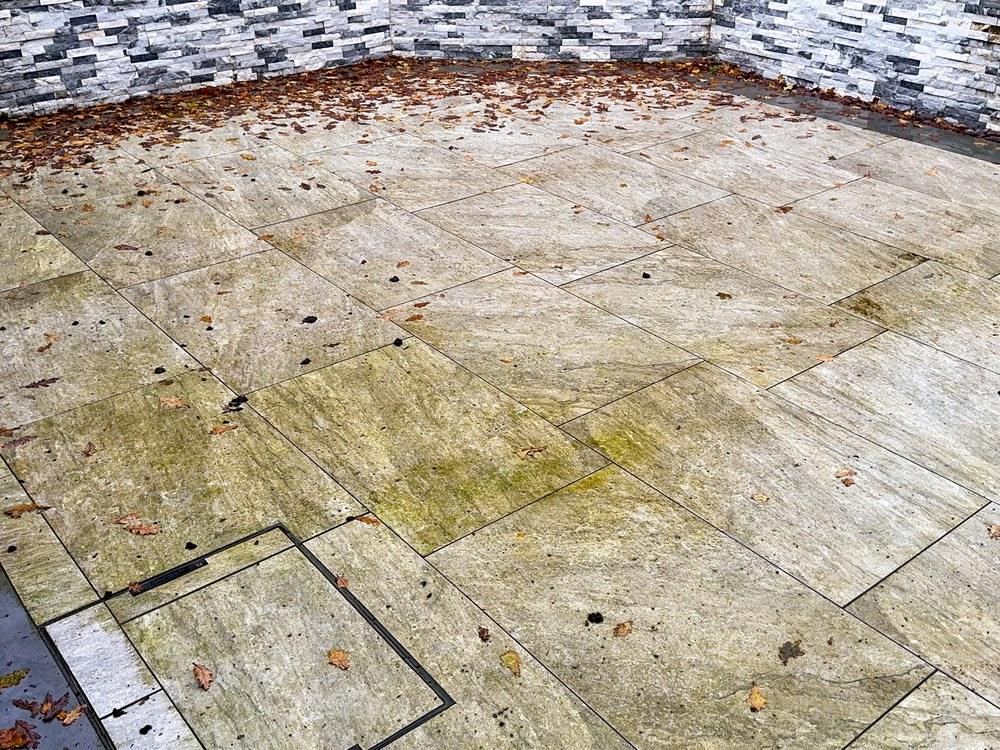
Patios get slippery when algae, moss and mildew form a thin film on the surface. Once that film gets wet from rain, dew or pool water, it feels like wet soap underfoot. That is why patios get slippery in the same shady spots year after year. The growth feeds on moisture and clings to rough concrete, brick, stone and the joints between pavers. A quick hose rinse moves loose dirt, but it leaves the slick layer and its roots behind.
Many people think a green patio is only a looks problem, but the film is alive and growing. It grows back from whatever is left behind in pores, joints and hairline cracks. Algae can look green, black or even reddish brown, and some kinds turn jelly-like when wet. Mildew often shows up as gray or black spots, while moss grows in thick green pads where water sits. All three feel slick underfoot once they get wet.
The fix depends on what feeds the growth, how deep it sits in the surface and who walks there most. Shade and standing water explain why one corner stays green while the sunny side stays clean. Steps and pool edges raise the stakes, since a slip there can mean a harder fall. Small changes to shade, drainage and sweeping decide how fast the film returns after a cleaning.
Algae, Moss and Mildew Build a Slick Film
Algae, moss and mildew all need steady moisture to grow, and shade keeps a surface damp longer. Poor air flow slows drying even more, so the strip under a tree or beside a fence turns green first. The north side of a house often follows close behind. Leaves, pine straw and dirt make it worse because debris holds water against the surface. Warm, humid months give the growth a long season to spread across a patio.
Surface type changes how fast the film builds and how hard it holds on to the surface. Pavers, brick and broom-finished concrete have tiny pores and ridges that trap water and spores. Smooth sealed concrete sheds water faster, though it turns slick sooner once a film forms. Algae on pavers usually starts in the joints, then spreads across the face of each paver. Low spots that hold puddles and old, pitted surfaces with more texture stay green the longest.
Shade and Splash-Out Around the Pool
A pool deck stays wet far longer than a patio, because swimmers drip and kids splash all day. The area around the pump and filter often stays damp even on days when nobody swims. If the deck slopes the wrong way or the drains clog, water sits in the same spots. Add shade from a screen, umbrella or trees, and you get a slippery pool deck that never fully dries.
- A green or black tint that shows up after rain and fades as the surface dries out
- Shoes that slide or squeak on a spot that felt fine a month or two ago
- Moss pads or dark lines filling the joints between pavers, bricks or stone
- Puddles that still sit on the deck a full day after a storm or swim
How a Cleaning Crew Spots Slick Growth on Pavers
When we look at a slick patio, we first sort out what is growing and where it grows. Green film, black mildew spots and moss pads each need a different level of cleaning. We check the surface itself, because pavers, natural stone and poured concrete handle pressure differently. We also look at paver joints, since too much pressure can wash out the sand that locks them. Drains, slopes and shaded corners show where the growth will try to return.
These details matter because the wrong approach can trade one problem for another. Too much pressure can etch soft stone, scar concrete or strip joint sand and leave gaps that catch heels. Water alone leaves living growth in the pores, so the patio turns slick again sooner. A cleaning plan that fits the surface removes the film without harming it. It also points out problems cleaning alone cannot fix, like a low area that holds water after rain.
- The surface material, such as poured concrete, brick pavers, flagstone or stamped concrete
- How deep the growth sits in surface pores, paver joints and hairline cracks
- Whether paver joints still hold their sand or already show gaps
- Where water drains, pools or runs off toward the house or pool
How Slick Surfaces Put Family and Guests at Risk
A slick patio is a real slip hazard, and some people face more risk than others. Young children run barefoot around the pool and rarely watch where they step. Older adults can be hurt more seriously, and falls are a leading cause of injury for people over 65. Guests do not know which spots stay slick, so they step where you would not. Wet towels, pool toys, spilled drinks and pets add even more ways to lose footing.
In Central Alabama, pool season runs long and patios get used for much of the year. Warm, humid nights leave dew on outdoor surfaces most mornings, even without rain. Summer storms soak shaded areas that then stay damp for days, so growth returns faster here than in drier places. A patio that looked fine in winter can turn slick by the first warm spring weekend. Plan your checks for early spring, before pool season and backyard cookouts start.
Steps, Slopes and Pool Edges Need Extra Care
The riskiest spots are where your feet change level or direction. Steps, ramps, sloped walks and pool coping, the stone or concrete edge around the water, all need good grip. Check these areas first after every rain and keep them clear of leaves and pine straw. If a step stays slick, keep people off it until the growth is cleaned away.
- Walk the patio after a rain and note every spot where your shoes slide or squeak
- Check pool coping and step edges for a dark film or green tint
- Watch which areas stay shaded and damp through the middle of the day
Keeping Your Patio From Turning Green Again
To stop regrowth, take away what the growth needs: shade, water and debris. Trim branches and shrubs so sun and wind can dry the surface, and point downspouts away from the patio. Clear drains, level low spots and sweep leaves and pine straw often, especially before rain. Then schedule cleaning before green patio slime builds up again, and keep pool deck drains clear in swim season. If the film is thick or the surface is natural stone, a professional cleaning is the safer choice.
Slick patios come down to a simple chain: shade and water feed growth, and growth turns wet surfaces slick. Breaking that chain works better than fighting the film every few weeks with a garden hose. A clean surface plus better shade and drainage keeps the patio safer for longer. Watch your problem spots through the year, especially after long wet stretches. Act when the green tint first returns, before anyone slips on the steps or the pool edge.
Get Safer Footing on Your Patio Again
Our crew cleans patios, pavers and pool decks with pressure set for each surface. Request a free estimate, and we will look over your shady spots and drainage with you.