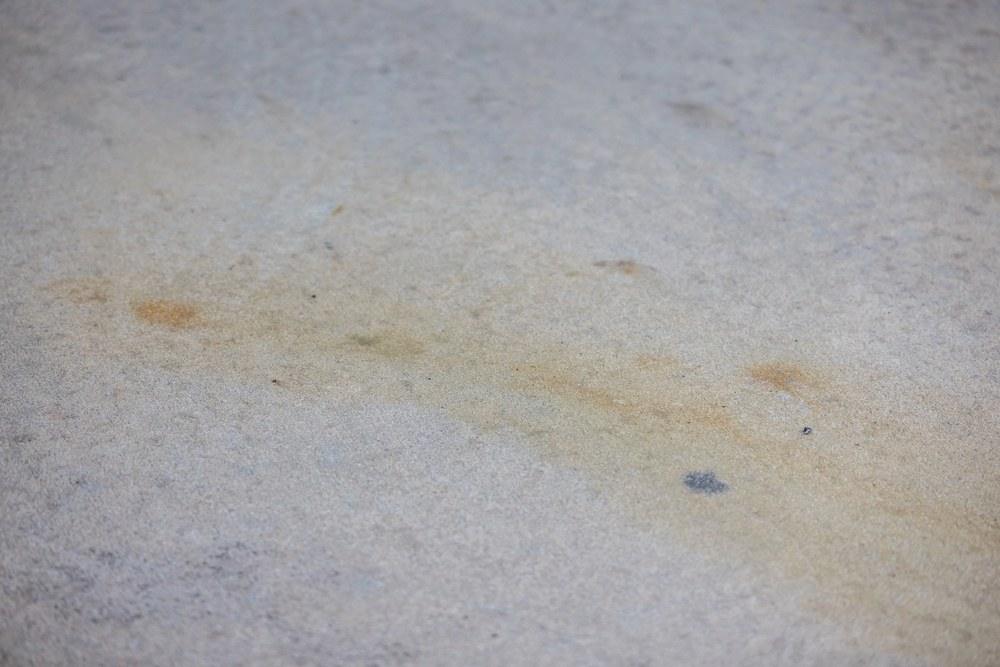
Removing red clay stains from concrete takes two steps: a pre-treatment and a thorough wash. A cleaning solution loosens the iron-rich stain, then pressure washing carries it away. Water alone moves the mud but leaves the orange tint behind, so timing matters as much as method. The best window comes after landscaping and heavy trades finish, but before the lot is striped and opened. Clean too soon, and new mud rolls right back across the fresh concrete.
New sites in Alabama pick up clay stains in two main ways. Rain falls on bare graded dirt and washes orange runoff across new sidewalks and curbs. Trucks and equipment track mud off the site on their tires, even when the entrance has a gravel pad. Each storm and each delivery truck adds another layer of red to the concrete. By the end of the build, the stains are spread wide, and most have set as they dried.
Getting the concrete clean before opening comes down to a few choices. You need to know why the clay holds on and what a crew checks before treating it. You also need to know when in the schedule to clean and why a hose rinse fails. Each answer shapes how the property looks when the first tenant, buyer or customer arrives.
Why Alabama Red Clay Stains Fresh Concrete
Alabama's red clay gets its color from iron, the same element that makes rust. New concrete is porous, with tiny openings that soak up water and anything carried in it. When clay-stained water soaks in and dries, the iron stays behind in those pores. That is why red clay on sidewalks shows up so clearly against bright, light gray new concrete. Broom-finish ridges, expansion joints and saw cuts trap even more of the fine clay particles.
Some stains are tougher than others, and light dust from dry clay usually washes off with less effort. Mud that dried in place, or runoff that pooled in a low spot, soaks deeper and leaves a darker stain. Construction mud stains near entrances and curb cuts get ground in by tires and foot traffic. Sealed concrete resists staining better than bare, fresh concrete that has never been treated. Older stains also tend to be harder to lift than recent ones.
Iron in the Soil Leaves the Orange Tint
Alabama's state soil, called Bama, has a bright red layer below the topsoil. Soil scientists at Auburn University say the color comes from iron that stays oxidized, much like rust. Iron stains act like rust stains on concrete, so they bind to the surface instead of rinsing away. Site work digs right into that red layer, which is why new builds spread so much of it.
- Orange, fan-shaped stains where storm runoff crossed a sidewalk, curb or ramp
- Tire tracks of red mud leading from the site entrance across the new lot
- Darker rings where muddy water pooled and dried in a low spot
- Red film in broom-finish ridges, expansion joints and around drain grates
What a Cleanup Crew Looks At on a New Site
When we walk a new site, we first trace where the clay came from. Runoff stains, tire tracks and pooled mud each need a slightly different approach. We check how fresh the concrete is, whether it was sealed and what finish it has. We also look at curbs, wheel stops, entries and storm drains, since those catch the most mud. Before treating a whole lot, test a small area to see how the stain responds.
These checks matter because the wrong treatment can cause new problems. Strong acid left on too long can etch the surface and leave a blotchy finish. Too much pressure can scar fresh concrete or rough up the surface so it stains faster later. Washing toward an open storm drain can send mud and residue where they do not belong. A plan that fits the site gives you an even, clean surface across the whole lot and every walkway.
- How old the concrete is and whether it has cured enough to wash
- Whether the surface is sealed, broom-finished, stamped or troweled smooth
- Where wash water will run, including storm drains, inlets and new landscape beds
- Which areas will be striped and need a clean, dry surface for paint
Timing the Clay Cleanup Around Final Construction
The right time to clean is after the last dirty work finishes and before the lot gets striped. Landscaping, irrigation, final grading and sod all spread fresh mud, and so do heavy delivery and equipment trucks. Once those trades are done, the concrete can stay clean long enough to matter. Striping should come after the wash, because paint bonds best to clean, dry pavement. Ask the general contractor when the last outdoor trade will finish and leave the site.
Alabama weather makes timing harder. A spring rain or summer thunderstorm can turn a bare red lot into a mud source in one afternoon. If a storm hits after cleanup but before the sod takes hold, fresh runoff can stain the concrete again. Cleaning new concrete before opening works best once sod, mulch or stone covers the soil nearby. Building a few spare days into the schedule gives you room to rewash if a storm hits.
Why Washing Too Early Wastes the Effort
It is tempting to schedule the wash as soon as the new concrete looks dirty. But every truck and rainstorm after that point adds new stains, and fresh concrete needs time to cure. Washing too early often means paying for a second full cleanup right before opening. Waiting for the right window means one thorough cleanup instead of two or three partial ones.
- Confirm that landscaping, sod and irrigation work around all walkways and lots is finished
- Set the cleanup date before striping and before the final walk-through
- Leave a few spare days in case a storm sends runoff across the site
Why Clay Stains Outlast a Simple Hose Rinse
A hose rinse fails because the iron in red clay bonds to the concrete surface. Water lifts loose dirt but cannot break that bond, and deep stains may need a second treatment. Removing the stain starts with a pre-treatment made for iron-based stains, given time to work. Then the area is pressure washed at a setting that is safe for new concrete. For a large lot or a tight opening date, a professional crew can handle both steps together.
Red clay will find its way onto almost any new construction site in Alabama. The goal is to deal with it once, at the right point in the schedule. Use a method that respects new concrete, and give the stains the treatment and time they need. Plan the cleanup after the last muddy trade, then stripe the lot on a clean surface. Done in that order, the first people through the doors see bright walkways and a sharp lot.
Open Your New Property With Clean Concrete
We remove clay stains and wash new walkways, curbs and parking lots before a property opens. Request a free estimate and tell us your opening date so we can plan around it.