Black streaks on roof shingles are almost always a type of algae called Gloeocapsa magma. Its spores travel on the air, land on your roof and grow wherever moisture lingers after dew or rain. As it spreads, the algae builds a dark outer coating that shields it from strong sunlight. That coating is why the stains look black or dark brown instead of green. The streaks are mostly cosmetic, and a low-pressure soft wash clears them without harming the shingles.
Many homeowners mistake the streaks for dirt, soot or mildew washing down from clogged gutters. The pattern gives it away, since algae stains start low on the roof and run downhill in stripes. Roofing manufacturers say the growth is most common in warm, humid parts of the country. The Gulf States sit near the top of that list for algae on asphalt shingle roofs. That puts much of Alabama, including the Montgomery area, right in the algae's comfort zone.
Knowing what the dark streaks on shingles are is only the first step toward fixing them. Next, it helps to know why one side of the roof streaks first. You also want to tell algae from moss, lichen and worn shingles before choosing a fix. Last comes the method, because a gentle soft wash helps the roof while high pressure can damage it for good.
Gloeocapsa Magma and How Roof Algae Spreads
Gloeocapsa magma is a blue-green algae, a simple organism that lives on moisture and sunlight. On a roof, most of the water it needs comes from morning dew that dries slowly in shade. Spores blow from roof to roof, so one stained house on a street often means more will follow. The algae is also commonly linked to the limestone filler used in many asphalt shingles. That filler is thought to help the growth hang on once it settles into the shingle surface.
Once a colony takes hold, it spreads a little farther with each warm, humid season. The stripes darken and widen until a light gray roof can look brown or black in large patches. Lighter shingle colors show the problem first, though dark roofs carry the same growth underneath. Roof algae rarely stays small, because every damp season gives the colony more room to grow. Cleaning removes the growth that is there, but new spores keep arriving on the wind every season.
Why North Slopes Streak Before South Slopes
In Alabama, south-facing slopes take the strongest sun for most of the day and dry quickly. North-facing slopes get less direct sun, so dew sits on them longer each morning. Tall oaks and pines add shade and drop leaves and pine straw that hold moisture against the shingles. Put those together, and the north slope or any heavily shaded slope usually streaks first and worst.
- Stripes that start near the gutters and fade as they climb toward the ridge
- Heavier staining on north-facing slopes or under overhanging oak and pine limbs
- Dark patches that grow wider each year instead of washing off in hard rain
- Similar streaks showing up on neighboring roofs along the same street or cul-de-sac
Telling Algae Apart From Moss, Lichen and Granule Loss
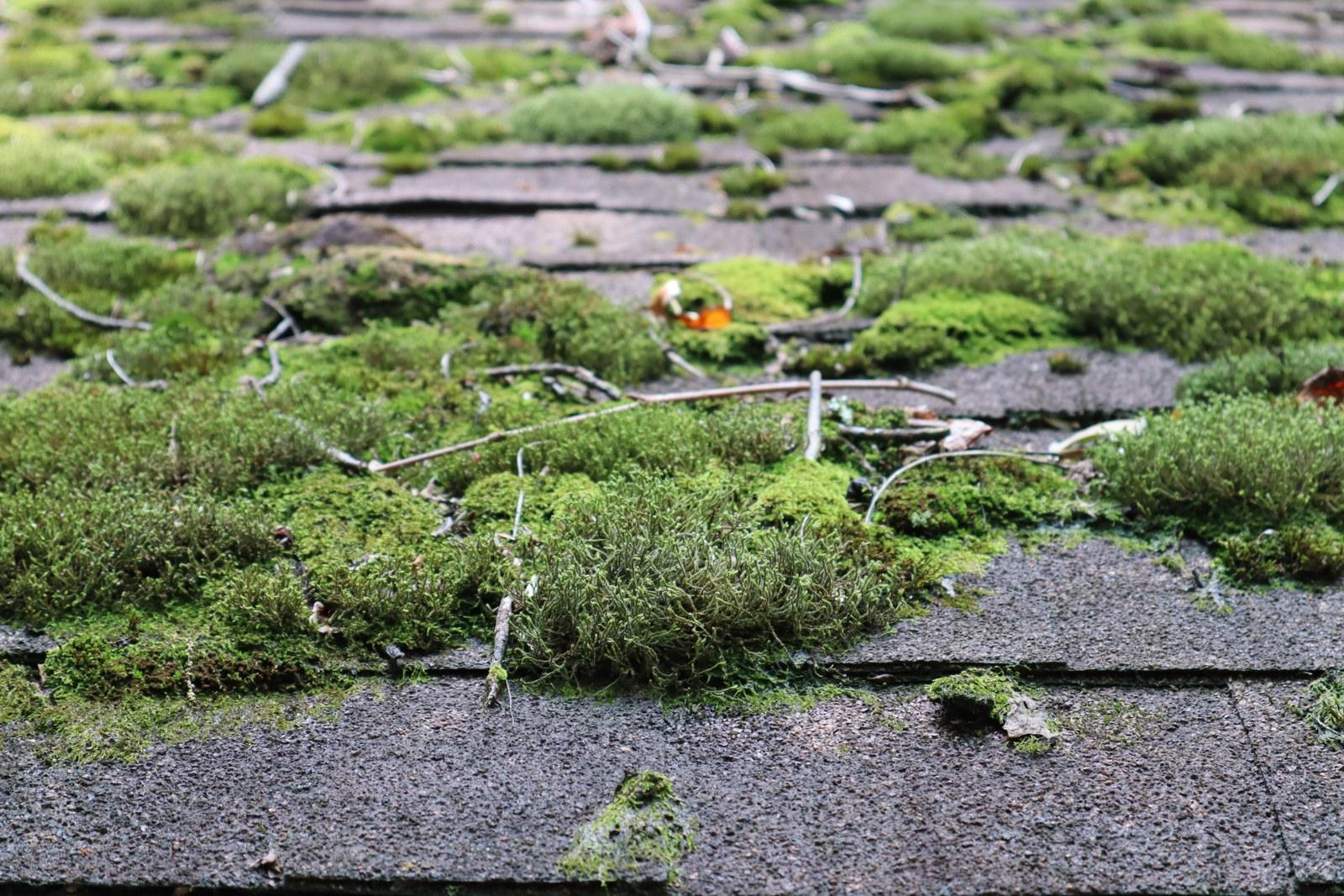
Before we clean a roof, we look closely at what is actually growing on it. Each problem calls for a different response, so naming it correctly comes first. Algae lies flat and stains the surface in long streaks, with no texture you can feel or see. Moss is green, fuzzy and raised, and it collects in shady seams and along shingle edges. Lichen forms crusty, round spots that cling tightly to the shingles and look gray, green or pale orange.
Granule loss is the problem that matters most to tell apart from staining. Worn shingles shed their protective granules and leave smooth, dark bald spots that pass for stains. Soot from a chimney or dirt under a tree stays in one area instead of spreading down a slope. Sorting out which problem you have shows what the roof really needs next. It may need a soft wash for roof algae stains, a roofer's look at worn shingles, or both.
- Flat, dark stripes that run downhill point to algae on the shingle surface
- Raised, fuzzy green clumps tucked in seams and shady corners point to moss growth
- Crusty, coin-shaped spots that cling hard to the shingles point to lichen
- Smooth bald patches and loose granules collecting in gutters point to worn shingles
Do Roof Streaks Shorten Shingle Life?
So, is roof algae harmful? For the most part, the streaks are a cosmetic problem that hurts curb appeal far more than the shingles. Shingle makers describe algae as discoloration, and it does not feed on the asphalt itself. Still, a streaked roof makes a well-kept home look older and less cared for than it is. Heavy algae also keeps the roof surface damp longer, and a damp roof is where moss usually gets started.
Moss and lichen are a different story, and shady roofs often carry all three growths at once. Long, humid summers in Central Alabama give moss plenty of time to grow between cleanings. Roofs under tall pines and oaks stay damp well into the day, even in summer. On those roofs, growth that starts as a flat streak can turn into raised green clumps. Catching the problem while it is still flat algae keeps the cleaning simple and gentle on the roof.
When Moss Lifts Shingle Edges
Moss roots into the small gaps between shingles and holds water like a sponge. As clumps thicken, they can lift shingle edges and let rain reach the layers underneath. You can watch for this safely from the ground, using a pair of binoculars on a clear day. Since a wet or mossy roof is slippery, leave close inspection and cleaning to a crew with safety gear.
- Raised green clumps along shingle edges or packed into valleys and seams
- Shingle tabs that look curled or lifted where the moss has grown thick
- Bits of moss or granules washing out of downspouts after a heavy summer rain
Why Pressure Washing a Roof Makes Things Worse
A pressure washer is the wrong tool for asphalt shingles, even when it looks like it is working. The force knocks loose the protective granules that shield the asphalt underneath from sun, heat and weather. Shingle makers warn that losing those granules can lead to early shingle failure and a shorter roof life. Roofing manufacturers point instead to a gentle, diluted cleaning solution applied at low pressure. Our soft wash roof cleaning follows that approach, letting the solution kill the algae before a light rinse.
Because the solution kills the growth at the root, the roof stays clear longer than after a rinse. We wet nearby plants before the wash and rinse them again afterward, since runoff reaches the beds below. Algae can return over time, because new spores keep blowing in from nearby roofs and trees. When you replace the roof someday, ask your roofer about algae-resistant shingles. These shingles have copper mixed into their granules to help slow regrowth.
Clear the Streaks With a Soft Wash Roof Cleaning
If dark streaks are spreading across your shingles, our crew can soft wash them away at low pressure. Request a free estimate to get your roof looking clean again.